The record, told through the decision

Four records from the firm’s work, written the way it keeps them: the situation, the decision the client faced, what was prepared, what it made possible and what it taught. Clients are not named; the work speaks for itself.

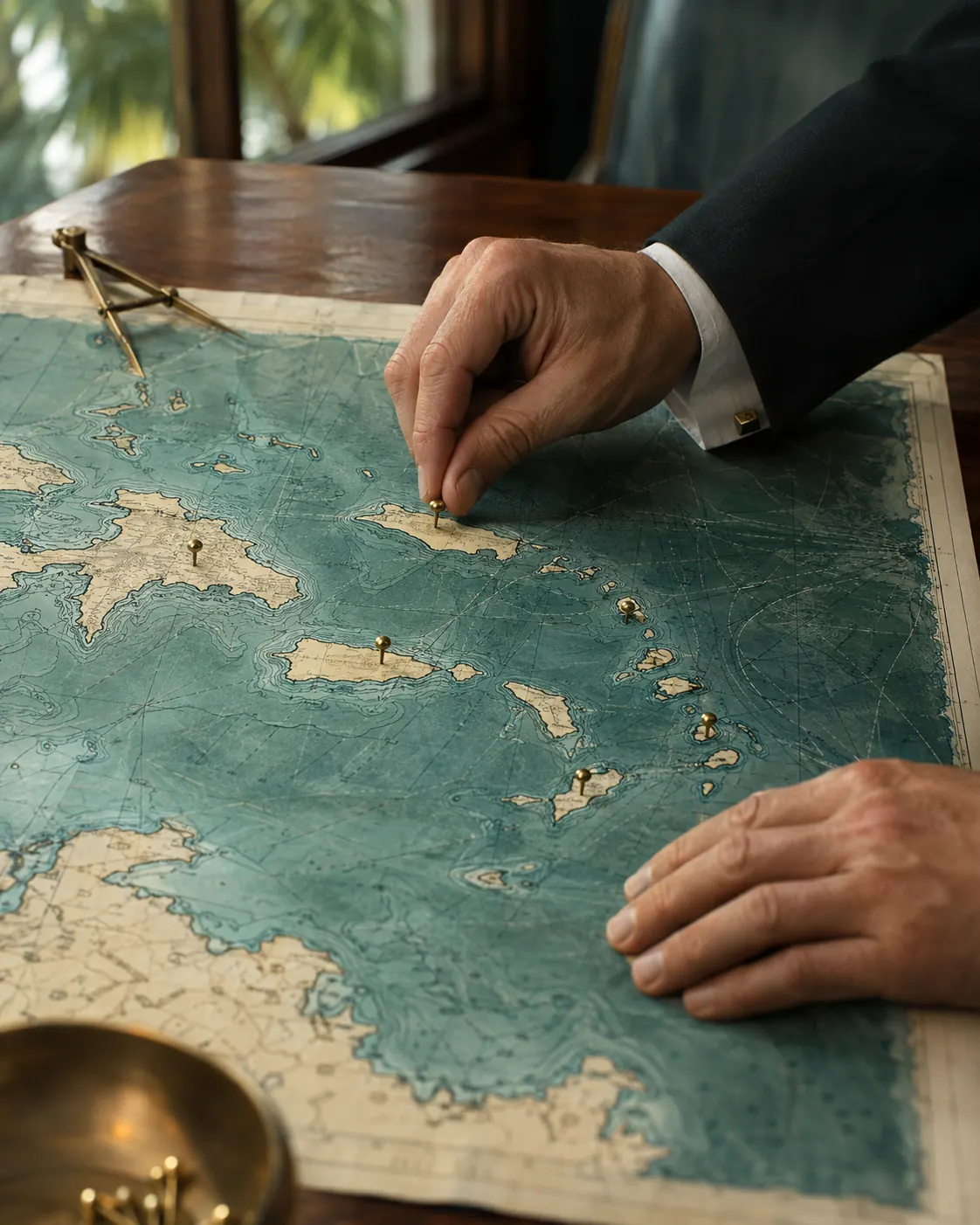
Hands placing brass pins on a printed map of Caribbean islands
01 · Transport · Financing

A new national carrier: capital at scale without surrendering control

Situation
A sponsor proposed a new carrier in an island market. A single financier was prepared to fund it, on terms that combined a long-term loan with an immediate equity stake.
Decision required
How to accept capital at the scale required without ceding control, and without giving the financier a route to ownership through events the sponsor could not prevent.
What was prepared
  • Investment prospectus and an economic presentation framed around the national interest
  • A dated comparison of each successive financing draft, with its status recorded
  • A financing structure in which interest runs only on funds actually cleared, no equity passes on funding, and any acquisition right is a last resort after notice, cure and independent valuation
  • Protections so that late funding by the financier cannot create a default by the borrower
What it made possible
To negotiate from a structure that protected control and tied every obligation to money actually received, with a dated record of which terms were proposed and which were binding.
What it taught
Successive drafts carried different rates, terms and equity provisions. A newer, better draft does not replace an earlier signed instrument. Every version was dated, classified and kept visible, so the client always knew which terms were proposed and which were binding.
02 · Transport · Acquisition

Rescue or restart: a regional institution with a legacy

Situation
A sponsor and its joint-venture partner were weighing a new airline against acquiring an established regional carrier with routes, staff and public standing, and with accumulated deficits.
Decision required
Whether the operating business could be acquired and recapitalised without inheriting its history, and what the governments involved would need to see.
What was prepared
  • An operating-business-versus-legacy-burden analysis with a proposed liability perimeter
  • Conditions precedent and a due-diligence matrix naming the source and status of each figure
  • A partnership and holding-vehicle structure for counsel to draft
  • Government-facing correspondence and an acquisition presentation for the client to carry
What it made possible
To put a credible acquisition case and a defined liability perimeter before its partner and the governments involved, knowing which figures still needed a source before any offer was made.
What it taught
A liability marked “retained” in a presentation is not released until a creditor, a statute or a government says so. And when an investor objected to an early financing response, the objection was to its form, not its substance. Both lessons now shape every proposal the firm prepares.
03 · Maritime · Multimodal

A ferry system that is really four businesses

Situation
A proposal for urban water transport combined commuter ferries, airport connections, tourism services and a heritage destination, with piers, shuttles and integrated ticketing.
Decision required
How to phase capital so that each part of the system proves itself before the next is committed, and how to present that to a financier.
What was prepared
  • Investment prospectus and a phased capital schedule, later revised
  • A diligence list covering vessel title, pier and land rights, permits, safety, insurance and ticketing integration
  • A financing structure with a protected moratorium and a contingent, last-resort acquisition right
What it made possible
To present a phased commitment in which each part of the system proves itself before the next is funded, with a reconciled model and schedule behind every figure.
What it taught
The original and revised schedules disagreed on dates and allocations. Before any figure goes to a counterparty, the financial model and the legal repayment schedule must be reconciled to each other. Blending four businesses into one projection also hides how differently each one behaves under stress.
04 · Tourism · Patient capital

Patient capital, honestly priced

Situation
An eco and adventure park with community and environmental aims, a long breakeven horizon and deliberately modest returns, sitting in a portfolio alongside far faster businesses.
Decision required
Whether financing terms suited to the rest of the portfolio were suitable for this project at all.
What was prepared
  • An investment prospectus setting out the project’s mission and its long-horizon economics
  • A clear statement that any debt structure must be stress-tested against the project’s own model before it is recommended
What it made possible
To decide, on the project’s own economics, which capital it could carry before accepting terms designed for a different kind of business.
What it taught
A project designed for slow, modest returns should not borrow on the terms a carrier can carry. Recommending a different kind of capital, or a smaller first phase, is part of the advice, even when it is not what the sponsor hoped to hear.
About these records. Details and figures are generalised to protect clients, counterparties and governments. Funding, approvals and completions belong to the parties who grant them, and are theirs to report.

Your situation, in confidence.

Describe the decision in front of you. The firm will say whether it has met something like it before, and what it would prepare.